Taste of Paradise: How Bora Bora’s Local Flavors Stole My Heart
Have you ever tasted a place and instantly felt at home? In Bora Bora, it’s not just the turquoise waters or overwater bungalows—it’s the food. From fresh poisson cru to smoky grilled fish at a family-run *ahima’a*, every bite told a story. This island doesn’t just feed you; it welcomes you. I never expected cuisine to be the soul of my journey, but in French Polynesia, flavor is culture. What began as a dream vacation transformed into a sensory pilgrimage—one where the most unforgettable moments unfolded not on postcards, but on plates passed hand to hand under swaying palm trees. Here, meals are not transactions. They are invitations.
First Bite: My Unexpected Encounter with Tahitian Cuisine
Upon arriving in Bora Bora, I expected postcard-perfect views—but not a culinary revelation. The island’s reputation for luxury resorts and dramatic volcanic scenery had shaped my imagination. I pictured myself lounging in an overwater bungalow, sipping cocktails as the sun melted into the lagoon. What I didn’t anticipate was how deeply food would anchor my experience. My first real taste of Bora Bora wasn’t served on fine china at a five-star restaurant. Instead, it came wrapped in banana leaves and presented on a wooden picnic table near a quiet stretch of sand, arranged by a local guide who sensed my curiosity.
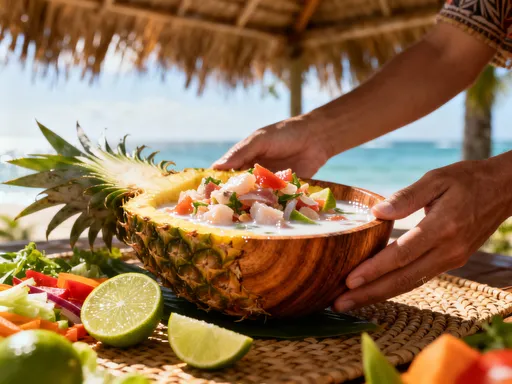
That meal introduced me to *poisson cru*, the unofficial national dish of French Polynesia. Raw tuna, caught that morning from the surrounding reef, was delicately sliced and marinated in rich coconut milk, fresh lime juice, diced cucumber, tomato, and a hint of onion. The dish was served in a hollowed-out pineapple, its natural sweetness subtly enhancing the oceanic freshness of the fish. Each bite was a balance of creamy, tangy, and crisp—clean and vibrant, like the island itself. I remember closing my eyes after the first forkful, not out of indulgence, but out of reverence. This was not just food; it was a language. And in that moment, I began to understand it.
What struck me most was the authenticity. There were no fancy plating techniques, no imported ingredients flown in to impress. This was food made with pride, using what the land and sea provided. It wasn’t designed for Instagram—it was made for sharing. That simple meal shifted my entire perspective. No longer was I just a visitor checking off sights. I became a participant, engaged through taste, texture, and tradition. To know Bora Bora, I realized, you must taste it. And that taste must be real.
Beyond the Resort: Finding Real Food in Local Communities
While many visitors spend their entire stay within the polished gates of luxury resorts, the true heartbeat of Bora Bora’s cuisine pulses in its villages. I made it a point to step beyond the tourist enclaves and explore Vaitape, the island’s main settlement. Far from the curated menus and Westernized dishes of resort dining rooms, Vaitape offered something more intimate: daily life. Here, small family-run canteens, known locally as *roulottes* or *snacks*, serve hearty, home-style meals to islanders going about their routines.
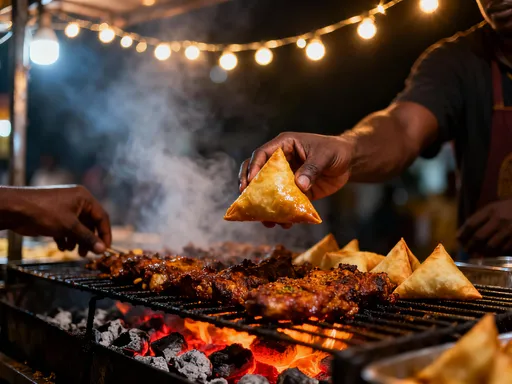
One morning, I followed the scent of wood smoke and grilled meat down a narrow path and found myself at a roadside stand where an elderly woman was turning skewers of marinated pork over an open flame. She smiled as I approached and offered a plate wrapped in foil. Alongside the tender, caramelized meat were slices of roasted breadfruit—known locally as *uru*—and a mound of mashed taro. These starchy staples, grown in volcanic soil and cooked slowly over hot stones, are the foundation of Tahitian eating. They are not side dishes; they are sustenance, served with pride and purpose.
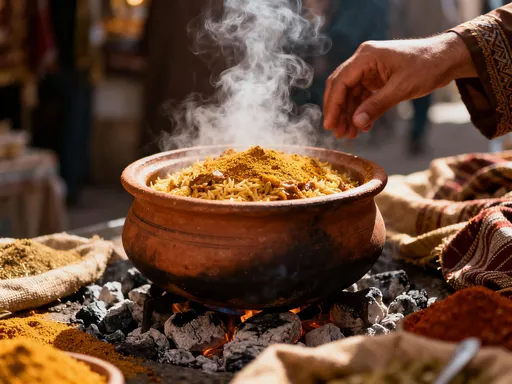
I learned that meals in Bora Bora are rarely eaten in isolation. They are shared events, often seated on mats or low stools, with conversation flowing as freely as coconut water. One of the most meaningful experiences was attending a traditional *ahima’a*, a communal feast cooked in an underground earth oven. I was invited by a cultural guide after expressing interest in local customs. The preparation began at dawn—pork, chicken, fish, taro, banana, and breadfruit were wrapped in banana leaves and layered over heated stones, then covered with wet sacks and earth to steam for hours. When the pit was opened, the aroma was intoxicating: smoky, sweet, and deeply savory. As we sat together on woven mats, passing plates and laughing over stories, I felt something rare—a genuine connection, unscripted and unperformed.
These moments don’t appear in glossy travel brochures. They aren’t part of packaged tours. But they are where the soul of Bora Bora lives. The island’s cuisine isn’t just about ingredients; it’s about community. And that sense of belonging, offered freely through food, is what makes the experience unforgettable.
The Role of the Ocean: Freshness You Can’t Fake
The Pacific Ocean isn’t just a backdrop in Bora Bora—it’s the primary source of nourishment. Every morning, as the sun rises over Mount Otemanu, local fishermen head out in small wooden boats, their nets and lines ready. The lagoon, a shimmering expanse of turquoise and sapphire, teems with life. Tuna, mahi-mahi, wahoo, and parrotfish are pulled from the water still glistening, their flesh firm and cool. This is not seafood that has traveled thousands of miles by air freight. This is food at its most immediate, its most honest.
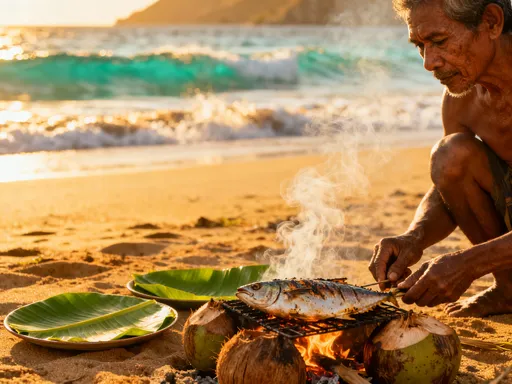
I had the privilege of joining a small fishing excursion with a family from the north shore. We didn’t use sonar or industrial gear—just hand lines and generations of knowledge. After a few hours, we had enough for a meal. Back on shore, they showed me how to clean and prepare the fish, using a sharp knife and practiced hands. Then, over a fire built from coconut husks, we grilled the catch with nothing more than a sprinkle of sea salt and a squeeze of lime. No marinades, no sauces—just fire, air, and the ocean’s gift.
The first bite of that grilled mahi-mahi was unlike anything I’ve ever tasted. The flesh was flaky yet dense, infused with a natural sweetness and a hint of smokiness from the coconut wood. The flavor was clean, almost elemental. This wasn’t farm-to-table; it was ocean-to-plate, and the difference was undeniable. In a world where freshness is often marketed as a luxury, here it is simply the standard. Sustainability isn’t a trend here—it’s tradition. Fishing is done in balance with the ecosystem, with respect for breeding cycles and reef health. There’s no overfishing, no waste. What is taken is honored.
Even in resort kitchens, many chefs prioritize local catch, sourcing directly from fishermen. But to truly understand the connection between the people and the sea, you must witness it firsthand. To see the care with which the fish are handled, the gratitude expressed before a meal, the way elders teach children to clean and cook—it’s a cycle of respect that transcends cuisine. In Bora Bora, the ocean doesn’t just provide food. It provides identity.
Coconut: The Secret Ingredient in Every Dish
If the ocean is Bora Bora’s kitchen, then the coconut palm is its pantry. No ingredient is more central to Tahitian cooking than the coconut. It appears in nearly every form: milk, oil, water, flesh, and even fermented condiments. It is both sustenance and symbol, deeply woven into the cultural fabric. During my stay, I visited a small family farm on the island’s western edge, where a couple demonstrated the traditional process of extracting coconut milk by hand.
The method was simple but labor-intensive. Mature coconuts were cracked open, the white flesh scooped out, then finely grated. The grated meat was mixed with warm water and squeezed through a cloth to release the thick, creamy milk. The first press yielded a rich, almost buttery liquid—the kind used in *poisson cru* and desserts. A second press, with more water, produced a thinner milk used in soups and stews. The difference between this fresh milk and the canned variety was astonishing. It had a floral sweetness, a nutty depth, and a velvety texture that store-bought versions simply can’t replicate.
But the coconut’s role goes beyond milk. I later tried *apéni fa’faru*, a traditional fermented coconut relish. Made by allowing grated coconut to sit in seawater for several days, it develops a pungent, tangy flavor that pairs perfectly with grilled fish or pork. It’s an acquired taste, bold and briny, but unforgettable once embraced. I was told it was once used as a preservative and digestive aid, and is still cherished for its health benefits and cultural significance.
Coconut oil is used for cooking and skin care, while the husks fuel fires. The shells become utensils or crafts. Even the leaves are woven into baskets and roofing. This level of resourcefulness reflects a deep respect for nature—one that informs every aspect of life. In the kitchen, coconut isn’t just an ingredient. It’s a legacy. And with every spoonful of coconut-infused stew or sip of fresh milk, you’re tasting centuries of wisdom.
Dining with Locals: A Taste of True Hospitality
One of the most profound moments of my journey occurred not in a restaurant or market, but in a modest home on the outskirts of Vaitape. After participating in a cultural demonstration—learning traditional dance, weaving, and storytelling—I was invited to share a meal with the family who had hosted the event. There were no formalities, no reservations. Just warmth and generosity.
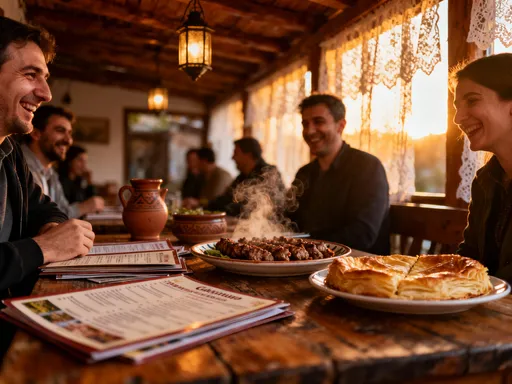
We sat on woven mats under a thatched *fa’a* (pavilion), the ocean breeze drifting through the open sides. The table was low, and the food was served on banana leaves. There were no forks or knives—eating with the hands is customary, and part of the experience. The spread included poisson cru, roasted breadfruit, steamed taro, grilled fish, and *po’e*, a soft baked pudding made from ripe banana or papaya, thickened with arrowroot and baked in banana leaves. It was sweet, earthy, and comforting—a dessert that felt like home, even though I’d never tasted it before.
At first, I hesitated, unsure of how to eat without utensils. The family laughed gently, not at me, but with me. They showed me how to pinch the taro with my fingers, how to tear the fish carefully from the bone, how to scoop the po’e with a piece of breadfruit. Their patience was humbling. What moved me most was their pride—not boastful, but quiet and deep. They weren’t performing for a tourist. They were sharing their lives.
In that moment, I understood that hospitality in Bora Bora isn’t a service. It’s a way of being. It’s not measured in star ratings or linen quality. It’s measured in time, in attention, in the willingness to include a stranger at the table. That meal wasn’t just nourishing—it was transformative. It reminded me that travel at its best isn’t about seeing new places. It’s about feeling connected to the people who live there.
Challenges for Travelers: Navigating Food Access and Expectations
Despite the richness of Bora Bora’s culinary culture, many visitors never encounter it. Resorts, while beautiful, often cater to international tastes, offering familiar dishes like pasta, steak, and sushi. While these meals are delicious, they rarely reflect the island’s true flavors. Authentic Tahitian cuisine—bold, coconut-rich, seafood-forward—is sometimes reserved for special events or local gatherings, not daily menus.
For travelers seeking the real food of Bora Bora, access requires effort. Local canteens may only be open during lunch hours, and some operate on a cash-only basis. Others open only on weekends or during festivals. Language can be a barrier—while many islanders speak French and some English, menus at small stands may not be translated. But a smile, a polite gesture, and a willingness to try go a long way. I found that simply pointing and asking, “What do you recommend?” often led to the best meals.
Another challenge is the availability of imported goods. Supermarkets on the island stock many processed items flown in from New Zealand or France, which can make finding truly local food difficult. Fresh produce is available, but staples like taro and breadfruit are often sold at roadside stands or small markets, not in large stores. My advice? Build relationships with local guides, drivers, or cultural hosts. Ask where they eat. Accept invitations when offered. Be open to spontaneity. Some of my most memorable meals happened because I said yes to an unplanned stop or a last-minute invitation.
It’s also important to manage expectations. Tahitian food is not always “pretty” by Western standards. It’s rustic, hearty, and often served family-style. Presentation is secondary to flavor and sharing. But that’s where its beauty lies—in its simplicity, its honesty, its connection to the land and sea. The best meals aren’t found on polished menus. They’re found in moments: a fish grilled on the beach, a coconut cracked open by hand, a plate passed across a mat with a smile.
Why Food Should Be Your Travel Compass
In the end, I didn’t leave Bora Bora with just photographs and souvenirs. I left with flavors etched into my memory—the creaminess of fresh coconut milk, the tang of *apéni fa’faru*, the smoky depth of earth-oven pork, the clean brightness of just-caught tuna. These tastes became my most lasting souvenirs, more vivid than any postcard.
Food became my bridge—to people, to history, to place. It taught me that paradise isn’t just a view. It’s a feeling, a rhythm, a shared meal under the stars. It’s the moment a stranger becomes a host, and a meal becomes a memory. In Tahiti, the heart beats loudest around the table. The kitchen is not separate from culture; it is its core.
When planning your trip to Bora Bora, don’t just book a villa with a view. Seek the kitchen. Ask about local dishes. Visit a market. Accept an invitation. Let your taste buds lead you. Because the most authentic experiences aren’t found in guidebooks. They’re found in the hands of a woman squeezing coconut milk, the laughter of a family sharing a feast, the quiet pride in a fisherman serving his catch. These are the moments that transform a vacation into a journey. And in Bora Bora, the journey begins with a single bite.